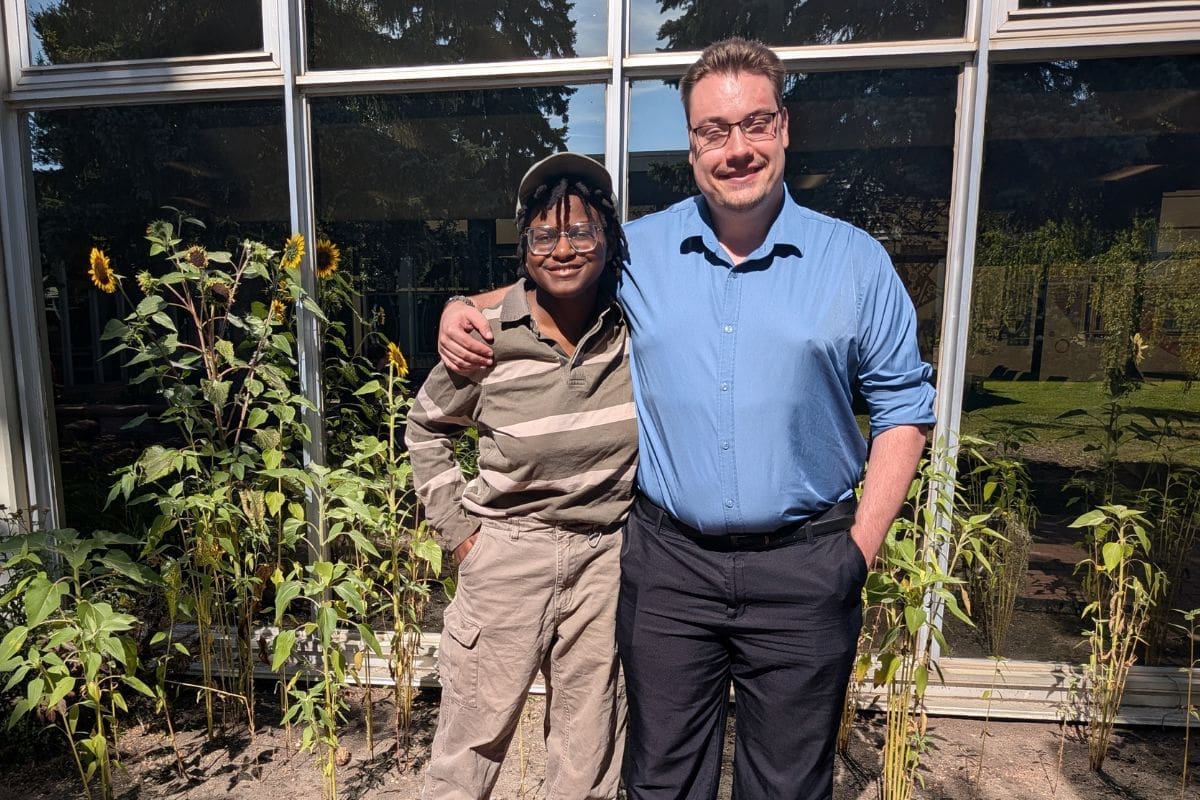
Navigating campus life alone can be isolating; even scary, sometimes. Some students move to the city with no friends or family. Others struggle with social anxiety. For Jess Roberts, a second-year Digital Design student, it was both.
Roberts, who uses they/them pronouns, moved to Edmonton last year to go to NAIT. For someone with social anxiety, this wasn’t easy.
“I had no family up here, I had basically no friends. I didn’t know anyone, and I was struggling with a lot of social anxiety,” said Roberts. “I never really had an in-depth thought about how the whole college system worked.”
Roberts wanted to put themself out there, though. So, they started looking for resources that might help, and ended up applying to be a mentee through NAIT’s Peer Mentorship program.
“It was an attempt to reach out and find someone I’ve never met before, and hopefully find someone that would be able to guide me … like another sort of support system because I really had no one.”
The program pairs experienced NAIT students with new students looking for guidance — not to help them get better grades or pursue a career (though they also provide professional development sessions) but to help them build social relationships, navigate campus and feel less alone.
Roberts filled out a mentee application that asked about their academic program, goals, interests and how they plan to be a proactive mentee.
“And then I got an email from Eric,” Roberts said.
Finding a support system
Eric Hertel, a third-year Bachelor of Business Administration accounting student and a student mentor, said starting at NAIT was an adjustment for him too. As a self-proclaimed “small town boy” from Fort McMurray, he finds activities like navigating the city and using public transit challenging at times.

“I wanted to be that support system for someone else that I wish I had when I had started,” he said. “I’ve always kind of been the person who tries to support others and help others out whenever I can.”
After applying and going through training, Hertel became a mentor for other students.
Now, Roberts and Hertel celebrate one year as a team. With Hertel’s guidance on communication, boundary-setting and trust, Roberts has seen increased confidence and self-esteem.
“I think being able to take a look at myself and actually be proud of the things I’m able to do and achieve … I’ve overcome so many hurdles, honestly,” said Roberts. “And just being able to realize some things, to sort of take a step back from myself sometimes and actually give myself some grace.”
Leonardo dos Santos, peer mentorship coordinator with NAIT student life, feels “extremely fortunate” to support students and see the program’s impact. In 2025-26, Peer Mentorship had 26 volunteer mentors and 41 mentees.
He said it’s common for mentees to have low confidence and no support system. “Many of them are international, many of them are from outside the province,” said Santos. He explained that he sees them progress in communication, confidence, public speaking and organization. “But also having a social connection, having a group of people in their corner that they can be themselves, be vulnerable.”
Santos said the differences become clear at social events, like mixers. The program is hosting a fall kick-off party on Sept. 24 — a type of event that used to be “horrible” for Roberts.
“I’d always be quiet or by myself cause I didn’t want to be a bother. I wasn’t sure how to even start interacting with other people,” Roberts said, adding that they wanted to take up “as little space as possible.”
Roberts said social anxiety will always be a part of them, but it’s gotten a lot better. They can go do things on their own, and even say hi to passers-by on walks. And when they start feeling overwhelmed, they reach out to their mentor for reassurance.
“I think being able to take a look at myself and actually be proud of the things I’m able to do and achieve … I’ve overcome so many hurdles, honestly.”
Hertel believes everyone has these fears to a certain extent, and reassures Roberts that they’re not — as Roberts puts it — “an alien from a different planet” for feeling like this.
“You’re going to be anxious about stuff you haven’t done before. You’re going to be a bit more averse to change or new experiences because they are scary,” he says.
Learning to take up space
Normalizing feelings like this is a key part of the Peer Mentorship program, said Santos. He thinks the social pressure students feel is because they worry about feeling judged, and the program helps students work through that together.
Roberts is grateful for the support system, and Hertel is proud to call Roberts his friend.

“Thank goodness I have someone like Eric in my life because … in the most genuine, genuineness of ways, I don’t think I ever would have become who I am today,” Roberts said.
“Just think, that’s one year. Think of where you’ll be next year,” Hertel added.
Peer Mentorship has sign-ups available year-round, and intakes for mentors and mentees occur every term. The program is a 12-month commitment and cycles through transition, support, engagement and reflection phases.
Roberts encourages students to take those small steps, like they did when they applied to be a mentee — even if it is scary at first. “If you make a tiny, tiny little goal in the corner of your heart to make it easier for the tomorrow you … I think you’ll find success, no matter what you’re looking for.”
If you’re looking for more information on Peer Mentorship and other student support programs, like International or Career Mentorship, visit NAIT’s mentorship webpage.
This article was originally published in our Sept. 9 print issue.
Feature image by Alleah Boisvert/The Nugget