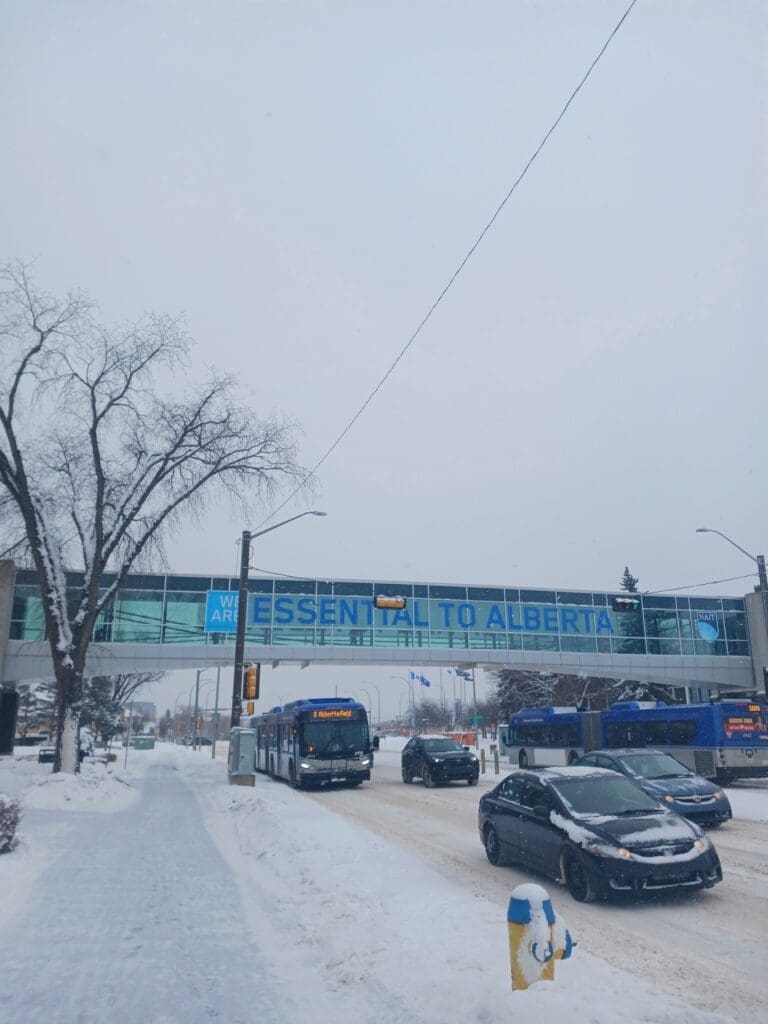
NAIT’s layout makes for easy winter travel between classes, since most buildings are connected by indoor pedways. But when students do have to brave the winter weather, whether it’s to walk from the LRT, bus stop or parking facilities, campus commutes can feel challenging. Icy sidewalks, snow piled along pathways and extreme cold turn short walks into slow and cautious ones.
Edmonton regularly experiences prolonged periods of freezing temperatures and heavy snowfall during winter, but according to meteorologists, this year is above average. So, how does NAIT handle abnormally snowy, icy weather and the reduced accessibility that accompanies it?
To better understand how snow and ice are handled on campus, the Nugget spoke with Bill Grewal, Manager of Operations at NAIT facilities.
“Our primary objective is the continuous operation of buildings and assets at NAIT, so that includes custodial, grounds, building operations,” Grewal explains.
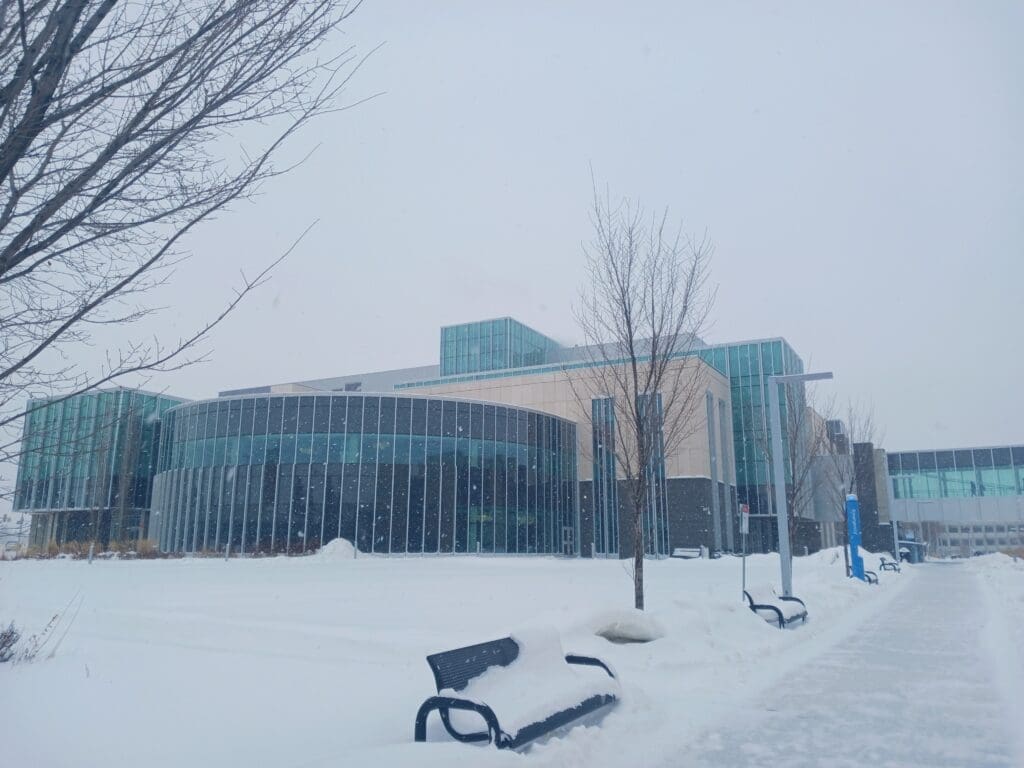
NAIT facilities are responsible for snow and ice removal on sidewalks and pathways between campus buildings, as well as sidewalks bordering roadways like 109 Street and 118 Avenue. Other areas, including shared use paths, arterial roads and LRT stations, fall under the City of Edmonton’s responsibility.
NAIT facilities follows a snow and ice management plan that prioritizes certain areas known as “hot zones,” including primary pedestrian routes, vehicle pathways, main entrances and accessibility areas. These zones are targeted first during snow removal operations.
“Our objective is to clear the main campus and hot zones by 7 a.m. after the snow has ceased,” Grewal says. Secondary walkways are cleared later in the day, around 3 p.m. after the snow has already stopped, says Grewal. For city walkways under NAIT’s jurisdiction, he says the goal is to have them cleared 48 hours after snowfall.
This winter, however, posed added challenges due to the volume of snow falling in short periods.
“The snowfall is a normal event that happens, but I think it’s the volume that we got in the short duration. So, that was the challenge,” says Grewal.
Similar issues have been reported across Edmonton, where the City of Edmonton’s Snow and Ice Control Program has acknowledged delays in clearing priority two and three sidewalks during heavy snowfall events.
“But we mitigated that with increased hours that our contractor worked, used some piling methods, and then constantly running crews in our hot areas or the hot zones,” Grewal explains. He says NAIT facilities rely on their vendor community and emulate some City of Edmonton practices, but aim to have snow removed within the next day.
“And we’ve also applied for sound bylaw exemption, so we can have extended snow removal, so we can do it earlier,” says Grewal. He explains that NAIT asked for an earlier start time instead of overnight removal. “Because we do have residential areas that surround NAIT, and if you’re trying to sleep, there’s that snow removal noise with the equipment.”
According to the City of Edmonton, most noise is not permitted before 7 a.m. on any day of the week, but exemption permits can be granted “for required activities, such as major construction projects or maintenance work, and events benefiting the community.”
Closer to campus, accessibility is another concern during extreme cold. Automatic doors can freeze or stop functioning, which Grewal says is addressed through NAIT’s maintenance call centre.
“Sometimes it’s just gravel or snow in the trackways,” he says. “We try to cycle and clear those free as quickly as possible.”
But if an issue falls under city responsibility, NAIT facilities submits a request through Edmonton’s 311 service, which allows residents and institutions to report snow clearing and infrastructure concerns directly to the city.
Facilities will also sometimes partner with the city to ensure the NAIT community’s needs are met during high volume events.
“We will extend services that are their responsibility to ensure these pathways [are accessible],” says Grewal. “We’re not relying on the city to clear the snow on their priority level, because they may not match our student flow of access to the campus.”
If students are unsure if a snow removal issue should be addressed by NAIT or by the city and forward an issue to the wrong place, Grewal says NAIT will engage with the city — but the institution still has to go through the 311 process.
“If you send it to us anyways, we’re not going to be like, ‘Oh it’s not on our property.’ We’re not going to ignore it,” he explains. “We will always look at the issue, and even if it’s not our issue, we’ll forward it to 311, but that’s probably the gist of it.”
Grewal says students and staff using the 311 process helps supplement other complaints the community has around NAIT campus, which the city receives.
“Our goal is to ensure routes are accessible and safe for students,” Grewal says.
While snow and ice are unavoidable in a winter city like Edmonton, communication and timely reporting play an important role in improving safety and accessibility across campus.
Students and staff are encouraged to report dysfunctional entrances, blocked routes and other unsafe winter conditions by emailing maintenance@nait.ca.
Feature image via NAIT Content Collective