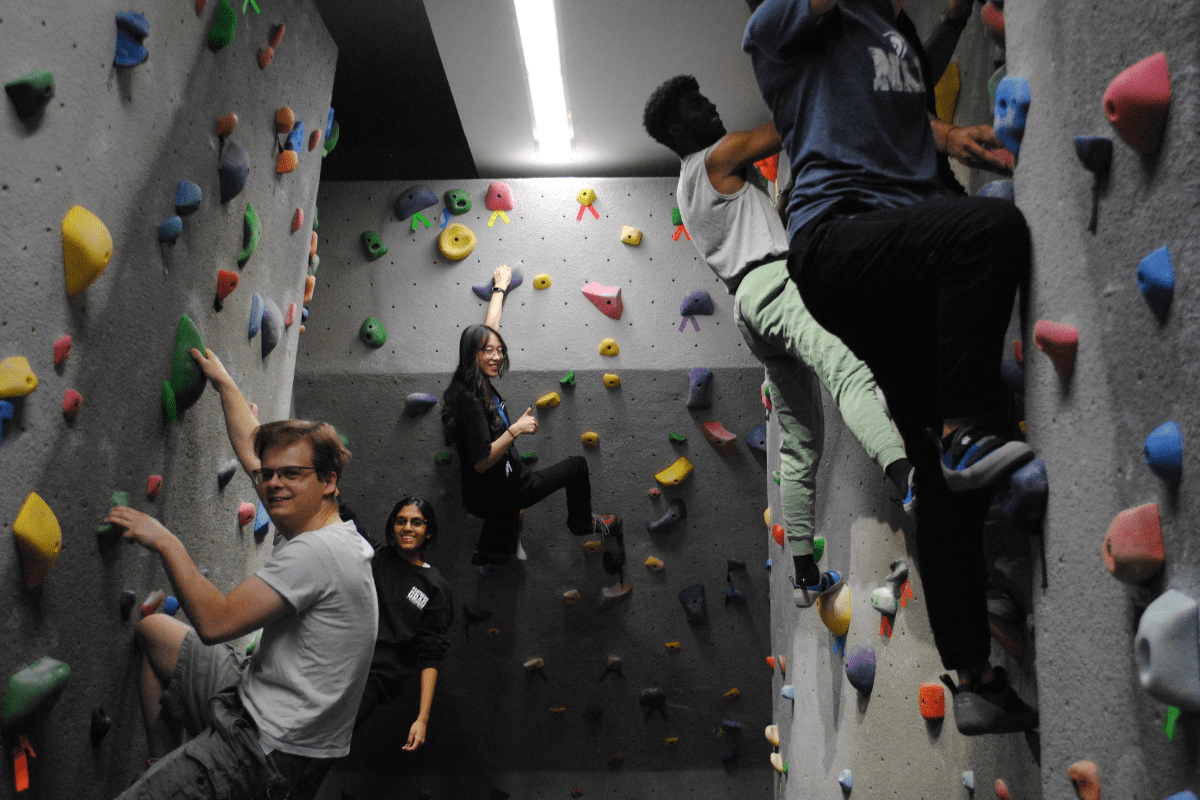
I’d watched people glide up NAIT’s wall for months while I was stuck to the treadmills. One afternoon, I entered the gym and glanced at the wall. My gut said that today was the day — and people say listen to your gut. Well, on this day that is precisely what I did. I grabbed rental shoes from the front desk and entered the climbing area. I went right into it.
Moving all four limbs at the same time was not as easy as I thought, I found out that day. But we humans sometimes do better than expected under pressure or the fear of embarrassment, and that is what happened with me then, too; I did better than expected. Slowly, I rose up and up.
About two-thirds up, I made the classic mistake: I looked down. The floor suddenly felt far away, and my balance wobbled. I landed (faceup, thankfully) onto the soft crash mats, and just lay there listening to my heart slow down. The landing was forgiving, and so was the room. The climber there smiled and said, “Try it again.” So, I did.
This time I used my brain more than my adrenaline and took the easy way up. When my hand finally touched the top, the feeling was fizzy and pleasantly simple: I did a hard thing I didn’t think I could do.
After one session, I get why a climbing wall belongs on campus. Climbing narrows your attention to a single problem — you can’t think about midterms when you’re deciding where to put your foot. Such a thought alone is enough to throw you off. Research has shown that rock climbing improves cognitive abilities like focus, but a 2025 study claims indoor climbing programs are also associated with meaningful reductions in depressive symptoms. Another recent study reported anxiety reductions in those who rock climb — many participants found it even more effective than therapy or medications. The evidence is still growing, but the signal is positive.
Climbing blends pulling, pressing and leg drive. Studies show it involves the heart and lungs and builds strength, especially in fingers, shoulders and hips. Research published in a sports medicine journal from 2003 found oxygen use and heart rate rise with route difficulty — for beginner climbers, this is the kind of moderate-to-vigorous effort that counts toward Canada’s guideline of 150 minutes per week for adults.
The social part matters more than I expected. You may not find many people at NAIT’s climbing wall, but the ones you see there will probably become your friends. This was my case — when interests meet, connection follows.
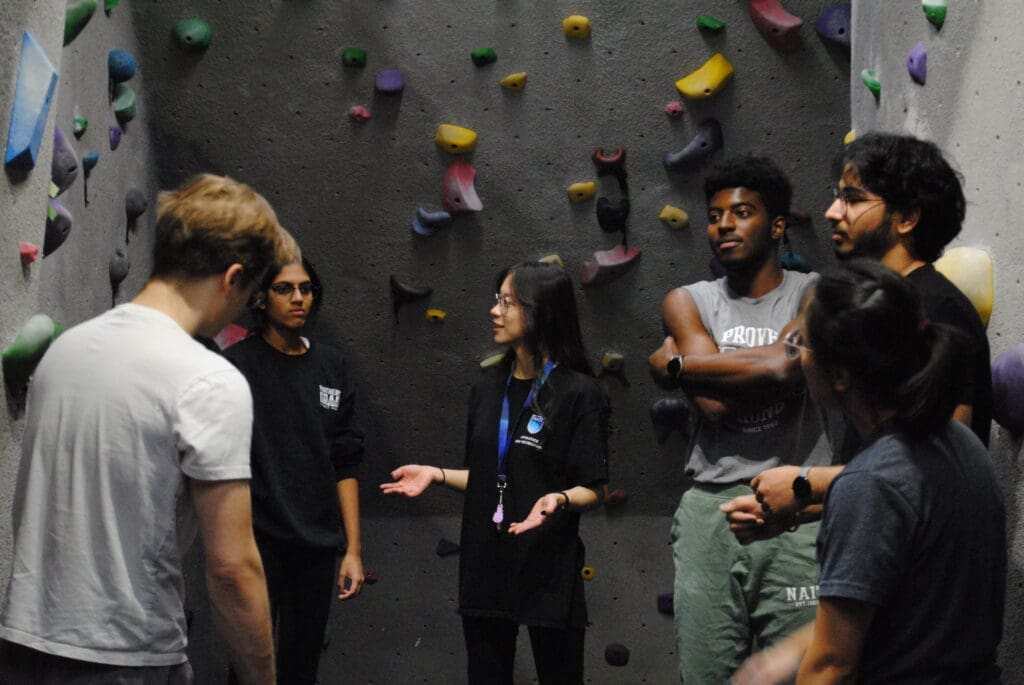
If you want to try it, the wall is inside the Fitness Weight Centre, and NAIT Athletics and Recreation has been hosting Learn to Climb sessions throughout the semester.
Was trying it on my own easy? Not really. Like every other thing, it takes time. But it was challenging in a way that felt safe and immediately rewarding. As a stress reliever, climbing forced my brain into the present. As a campus amenity, the climbing wall is a win. It’s accessible, skill-building and just fun enough that I’m already planning to go back and do it again.
Feature image by Naazdeep Kaur