Winter in Edmonton brings a major shift in how students experience school. As daylight exposure shrinks and temperatures drop, motivation, energy and connection follow suit. While winter classes are academically no different from fall or spring, the season itself makes everything harder.
Even as days grow longer and a brief sense of hope returned for last week’s spring of deception, winter’s impact hasn’t disappeared quite yet. After all, there’s always a second (or third) winter in Alberta.
“The weather’s pretty unpredictable,” says Shayna MacLeod, a benefits and wellness specialist at NAITSA. MacLeod helps run NAITSA’s Peer Support program and says that according to statistics, more students use Peer Support in the winter.
“It’s not a happy time for a lot of people in general, just because you’re not getting that sunlight as often as you get in the summer, because even if there is sun outside, it’s very cold.”
The sun feels promising for students, says MacLeod. But it doesn’t change the daily challenges students face.
“The winter can be really tough for students who maybe aren’t used to the Alberta winters. So it does kind of bring that sense of homesickness, loneliness,” says MacLeod.
Winter can intensify feelings of isolation, for international students in particular. “They are far away from their support system, their network, their family and friends,” says Jingyang Gao, a mental health program supervisor at NAIT. This isolation often overlaps with academic stress and fatigue.
“I think anxiety is always our number one topic no matter the time of the year, but it is worse in the winter,” says MacLeod. During the winter semester, she says, students who finish their studies in April feel stressed about the academic term coming to an end. “So, that winter semester is like, ‘Okay, I need to bring my GPA up or just get the classes done that I need so I can graduate in the timeline that I expect to graduate.’”
Gao says the struggle isn’t about a lack of care or effort. Sleep and daily routines are a common casualty, and with darkness stretching into the morning, students may feel clumsy and unmotivated despite wanting to put their best efforts forward to finish the year strong.
“Sometimes it’s really about the seasons, not because they don’t care about the school. It’s really about the barriers created by winter, that they’re feeling low mood, they’re feeling low energy,” Gao explains. Fatigue can sometimes make simple tasks feel overwhelming, especially when paired with shorter days and reduced social activity.
“You have to get up at six and get ready for school or for work, but then it’s still dark outside and that changes everything,” Gao says. Disturbed sleep hygiene can have a negative ripple effect into productivity, mood and classroom engagement.
Commuting to school using the Edmonton Transit Services (ETS) adds another layer to already mounting stress, feeding the unease already brewing. Cold temperatures, black ice on the roads and unreliable transit can turn getting to class into a daily challenge.
Despite these challenges, small but intentional strategies can make a real difference. Maintaining routines, breaking coursework into manageable steps and staying socially connected in low-pressure ways is the key to break the loop.
“I think my advice would definitely be to reach out to your friends, talk to your friends and your support circle,” MacLeod says. She suggests simple check-ins or casual conversations with friends and family.
“Your friends are all feeling the same way,” says MacLeod. “So you can kind of plan together with your support circle on how to support each other and build that community in the winter.”
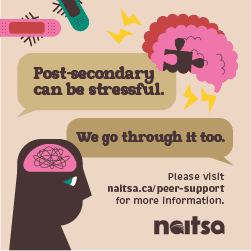
For students feeling isolated from their support circles, NAITSA’s Peer Support can be a helpful resource. MacLeod says that even though the Peer Supporters are students, they’re highly trained and there to actively listen to fellow NAIT students.
“It is nice for a student to know that they have someone to talk to. And it’s not necessarily like a professional counselor or psychologist, which makes it a little less intimidating sometimes,” says MacLeod.
Campus resources are available, but sometimes underused due to busy coursework or lack of knowledge about the programs, says Gao.
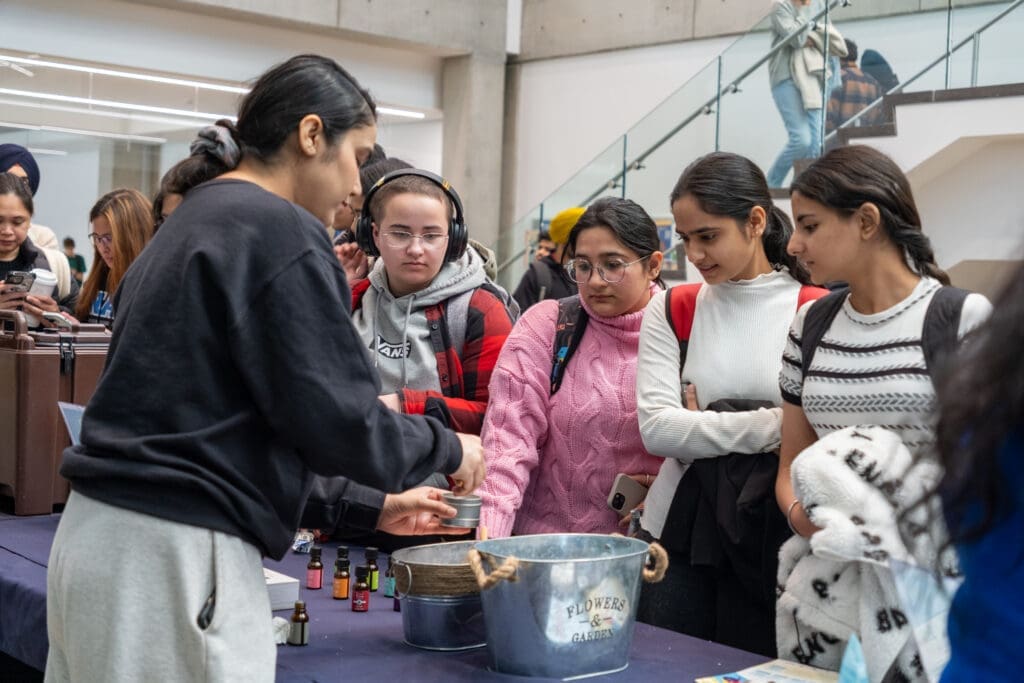
“Or sometimes it’s really about the stigma against it,” she adds. “Whenever you feel like things are not manageable anymore, or you feel like it’s interfering with daily life, or lasting for a week … then this is a good time to reach out.”
Free counseling services and wellness content shared through NAIT Student Life platforms offer accessible support, but Gao says students shouldn’t wait until they are in crisis mode to get help.
“Support is everywhere, but I recommend people to reach out for help at any time you feel like it,” Gao says.
As winter continues, students are encouraged to seek daylight when possible — MacLeod and Gao both suggest checking out the Happy Light Luxe from NAIT Library Services, which mimics daylight indoors.
NAIT students should also remember they’re not alone. “We’re all experiencing this together,” Gao assures.
Students can access NAITSA Peer Support from 9 a.m. to 3 p.m. from Monday to Friday online or by visiting room J209B. For NAIT counselling services, students can book an appointment by calling 780-378-6133 or by logging into their MyNAIT Portal.
Featured image by Roiel Carlos