Pride, by its very nature, is a protest.
I have a vivid memory of visiting the Stonewall Museum in New York with my long-term partner. It’s small as far as museums go. There’s a bar on one side and a small atrium on the other. Historical photos featuring Marsha P. Johnson, a Black trans woman who is famously credited for throwing the first brick at Stonewall, fill the space. At the back of the museum is a sitting area with archival footage playing against one wall, but the centre of the space is what can only be described as a living memorial.
There are perhaps thousands of sticky notes, doodles on the wall, pieces of paper, drawings, letters, autographs — mementos from Queer people all around the world who have left their words of love and encouragement.

Queer people who, like me, came to this space in pilgrimage to see the history and legacy of those that came before us. Those that fought for us.
The museum is a cultural touchstone that means so much, I find myself with tears in my eyes and a tickle in my throat as I write this.
You’ve probably heard the phrase, “the first Pride was a riot,” and it’s not an exaggeration.
But sometimes Pride is also a celebration — of our identity, our existence, and in today’s climate, our survival.
And while conventionally Pride month occurs in June, NAIT is celebrating Pride from March 9-13. There are so many fun events planned, from a drag show, living library sessions, the first Pride walk since 2019, a film festival. There’s a little something for everyone.
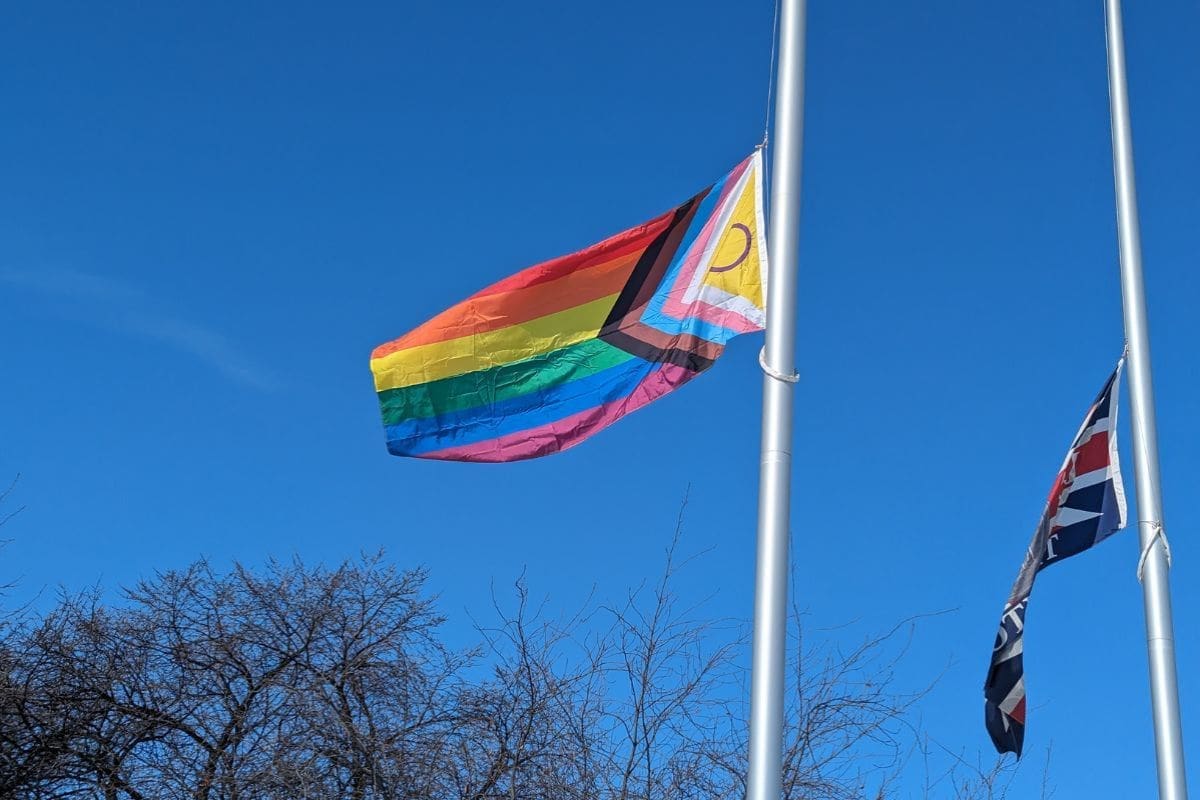
But that hasn’t always been the case. Last year, a NAIT student wrote that they “noticed less and less events during NAIT Pride.” The author also described many of the political realities that come with being Queer in Alberta: the anti-DEI of it all, Alberta flags banning rainbow flags, the list goes on.
Modern pride celebrations have been contentious. Folks have a lot of valid critiques on things like rainbow capitalism: “the action of companies claiming to support LGBTQ+ cause and communities but are actually making merchandise for-profit and capitalize on the trend,” defines writer Terris Schneider.
It’s when your bank drags up their Instagram logo to a rainbow one in June, only for it to switch back to its normal garb July 1.
But I don’t know anymore. In the current climate, I’m all for companies being visibly in support of Pride, even if it is just a logo. It’s kind of funny how things shift in that way. Certainly, me and my friends will always remember those organizations and institutions that once donned their rainbow drag in June only to keep their heels in the closet in recent years. Actions speak far louder than words.

But sometimes Pride is also a celebration — of our identity, our existence, and in today’s climate, our survival.
This year, NAIT has expanded their Pride offerings. In this context, is that not an act of protest? When other schools are moving away from inclusive hiring policies, it seems like NAIT heard students’ feedback, and they listened.
In a previous interview with the Nugget, Manager of the Centre for Community and Belonging, Daley Laing, said, “NAIT is a place for everyone … it’s really essential that students and staff don’t feel like they have to leave part of themselves at home in order to attend NAIT or work at NAIT.”
It’s a sentiment that may be easy to say but can be far harder in practice. As a survivor of the Edmonton Catholic school system, it wasn’t until post-secondary that I felt it was safe to come out of the closet. Some of the things that have happened over the past year or so have personally made me feel almost as unsafe as I did when I was a child. I’ve spoken to longtime Queer friends a generation or two ahead of myself who have expressed the same.
It’s taken me a long time to process my own feelings about the state of the world and attack on queerness, and I think that events like these are vital. Whether Pride is a protest or a celebration, ultimately, Pride needs to exist. And I believe Laing when they say at NAIT, “we welcome everyone.”