If you’re at NAIT for spring classes, you’ve probably noticed that there are less students on campus — but more Canada geese.
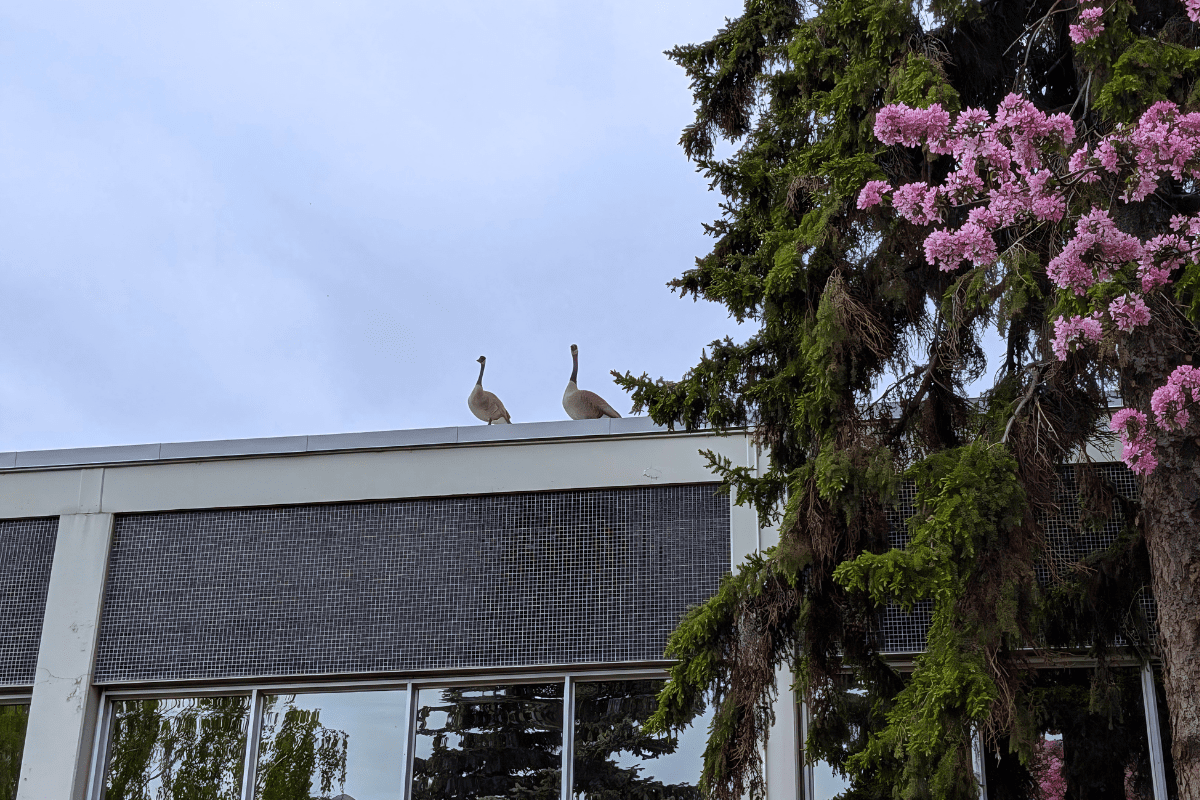
Their nesting season coincides with NAIT’s spring semester, and the large migratory birds have overtaken the courtyards and parking lots, sometimes appearing to survey campus traffic from NAIT’s rooftops.
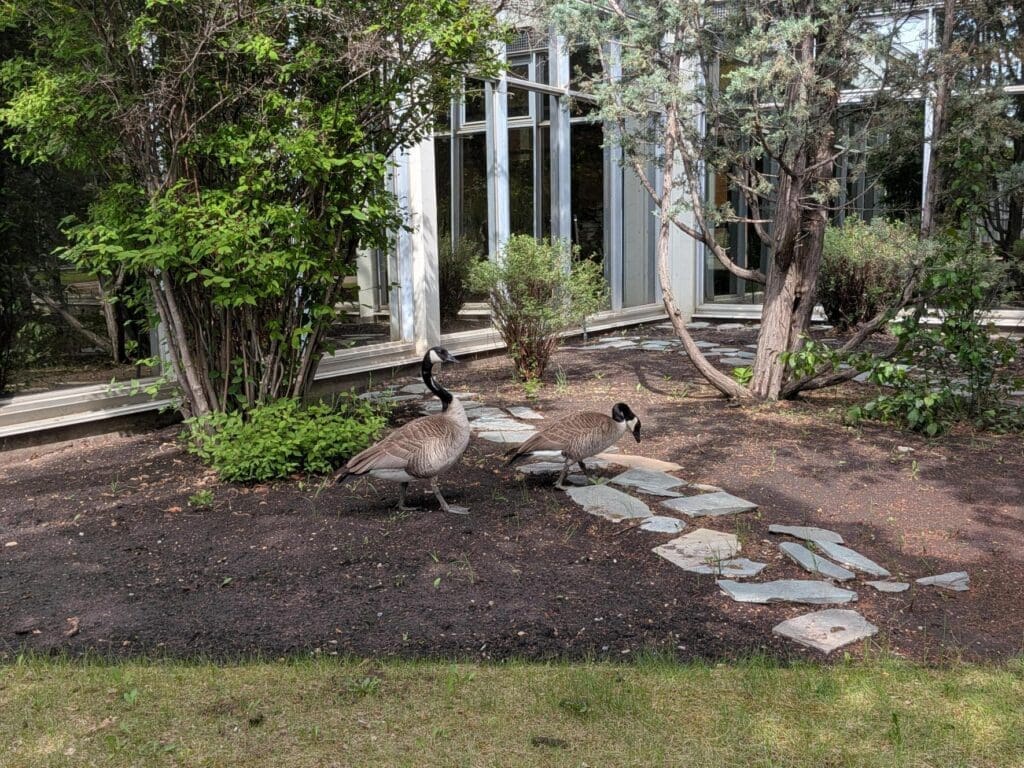
The institution has even put up signs in courtyards where geese are nesting to warn students and staff that these animals can be aggressive and territorial.
At the same time, the geese seem to coexist well within the community.
They seem so familiar with the environment that it’s almost like they, too, are simply returning for a semester of classes.
“They’ve become a big part of Edmonton’s culture … they’re really good at living harmoniously with human populations.”
Historical NAIT nesters
This nonchalant attitude from the campus geese is because, well, they probably are returning to the area.

Canada geese are “historical nesters,” WILDNorth executive director Dale Gienow explains.
“Geese are choosing their nest sites often where they would consider safe areas,” he told the Nugget. If they’ve had success raising their young in one area, they’ll keep coming back.
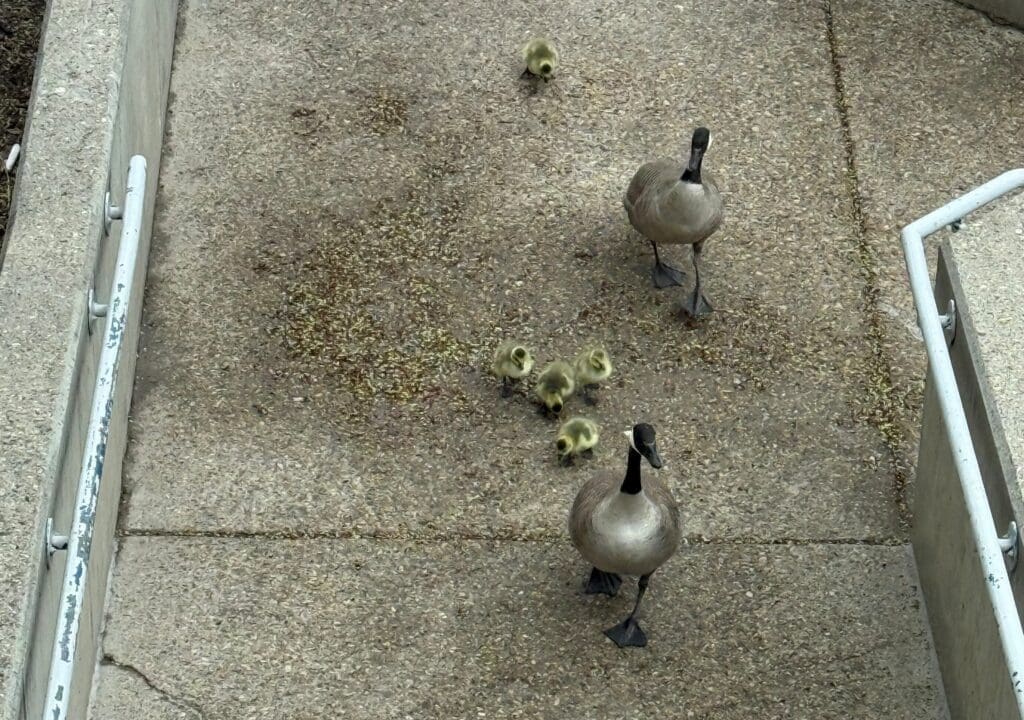
“Before they build their nests, the geese have already determined where upon hatching they’re going to lead those young ones to water,” says Gienow. After hatching, the family stays around the nest for a couple of days so the goslings can build strength before following the parents to a water source. This time period is crucial, Gienow says.
“Geese might lead their young a couple of kilometres across the city, which can be very treacherous for them.”
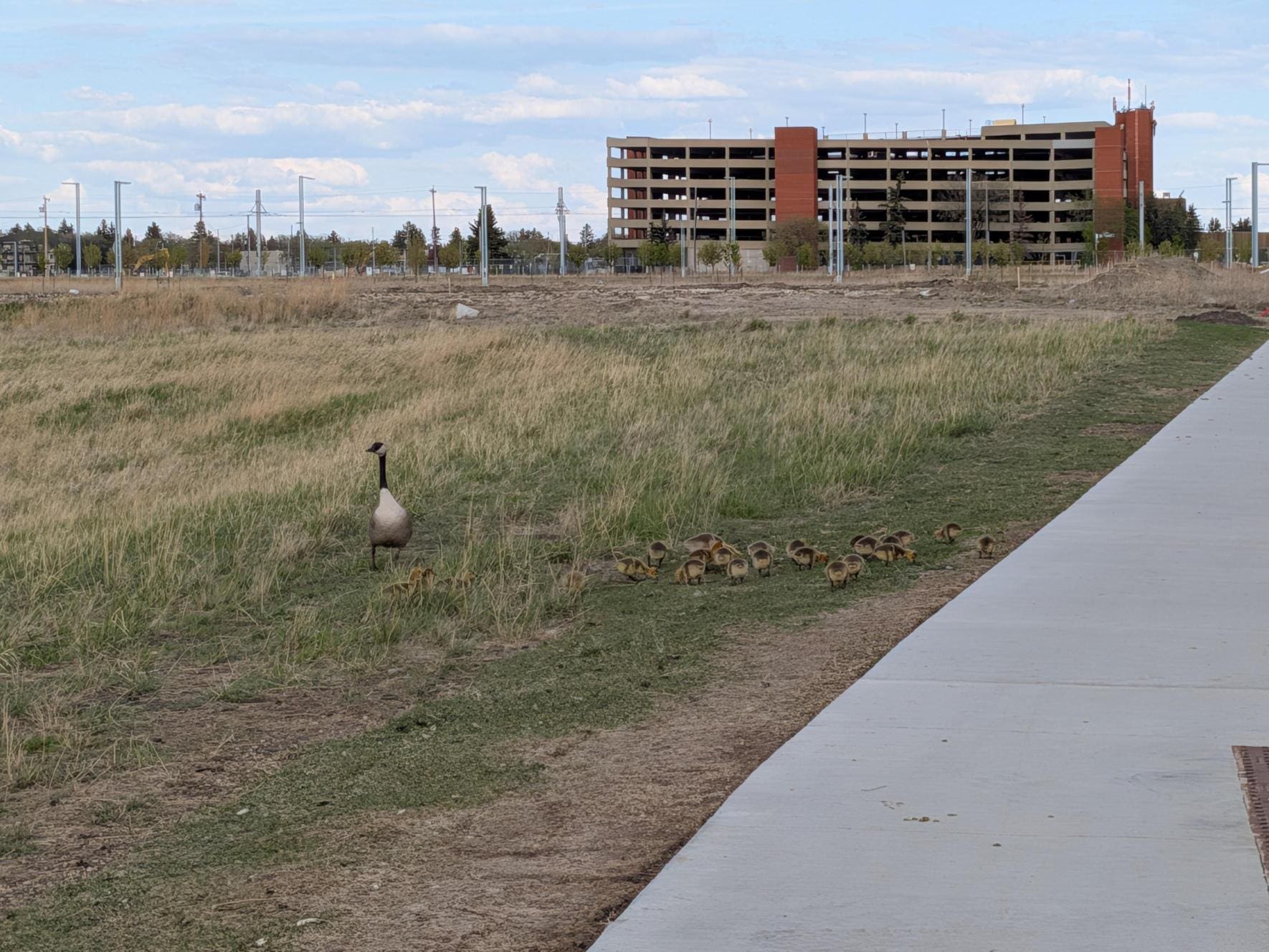
Because they are territorial animals, not every pair can nest right by a water source — so finding a safe nesting spot they are already accustomed to can make their journey easier.
“So if you’re seeing geese in your courtyard, it’s probably the same pair year after year raising their young,” says Gienow.
A federally protected species
Edmonton is a thoroughfare for migratory birds, including geese. In June, Gienow says WILDNorth can get as many as 200 phone calls a day.
“And of those, we might get 40 of them relating to geese,” he says.
He says the first calls the rescue gets usually relate to when geese are migrating from their winter habitats and looking to build nests. Many of these questions relate to deterring the animals from nesting in inconvenient or unsafe places — like a nest a goose built in a Tim Horton’s drive-thru last year.
“There’s nothing more Canadian than that,” Gienow says.
The public can deter geese from nesting in inopportune places, but once the nest is built and eggs are laid, Canada geese are federally protected and cannot be relocated by anyone without a permit.
“Believe it or not, there was a time, not that many years ago, when Canada geese were quite rare,” says Gienow.
According to Environment Canada, Canada geese were considered “uncommon” just 30 years ago and “extirpated” or locally extinct around the early 1900s. Now, the birds are considered a “public resource” and are protected under the Migratory Birds Convention Act (MBCA), 1994.
“The MBCA provides for the protection and conservation of migratory birds, and prohibits people from harming these birds, except under specified conditions,” says the Government of Canada website.
“Because of those protections, they’ve come back in big numbers,” Gienow explains. “They’ve become a big part of Edmonton’s culture … they’re really good at living harmoniously with human populations.”
In fact, many Edmontonians will go out of their way to keep Canada geese safe.
Respecting Canada geese on campus
Though the geese are usually tolerant of people, they still need their space, especially when nesting.
This could mean NAIT facilities flagging an area to keep the public away, or even taking a different route to avoid a protective goose on campus.
“Once they’ve established themselves and they have a nest there, [give] them that space that they can do geese things and so they’re not too close to people,” says Gienow.
“They’re generally not afraid of us, but if we do push some … they can become aggressive.”
Gienow also says students and staff should not feed the geese.
It’s prohibited by law in the City of Edmonton and can damage their health — especially bread, which is like “goose candy,” Gienow says.
“I know people’s hearts are in the right place … unfortunately, for developing young ones, there can be all kinds of defects that can happen as a result of being raised on bread.”
A diet of bread can lead to diseases like angel wing, which prevents waterfowl from flying due to deformation caused by malnutrition.
“It’s really a death sentence for the geese,” says Gienow.
He also says to be aware of lone geese in the spring that don’t want to move. There’s probably a female with a nest nearby that the lone male is protecting from other geese.
“These are typically the male birds that are on sentry,” says Gienow. “He doesn’t want to leave because he’s doing his job, but people get very concerned about them.”
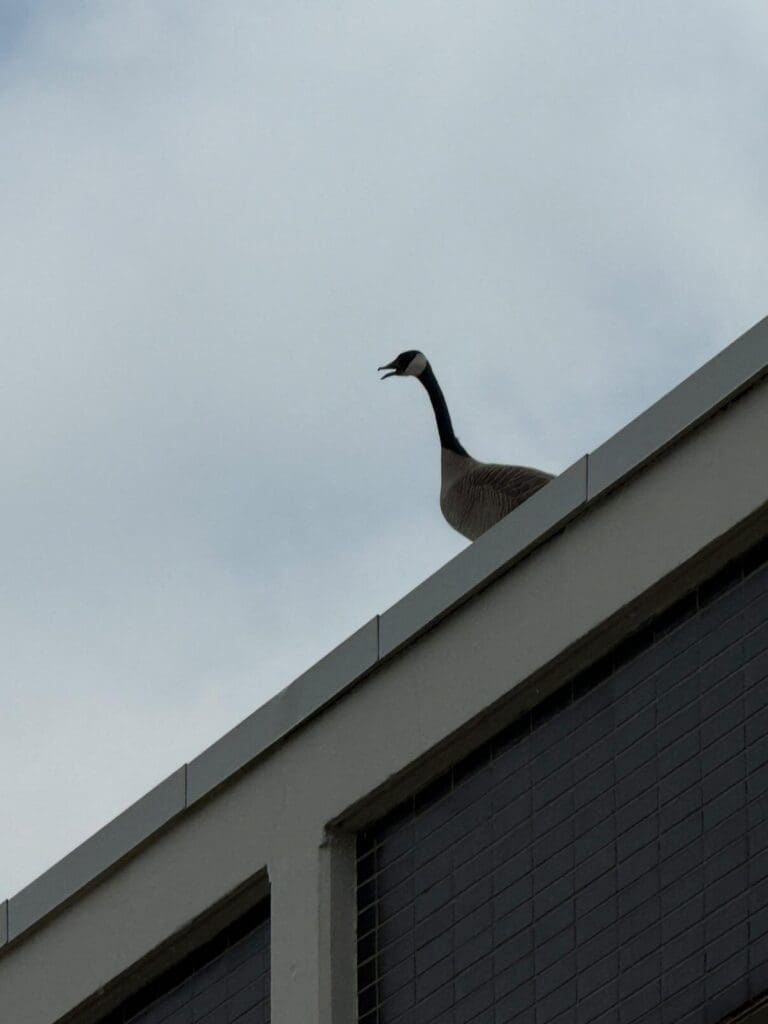
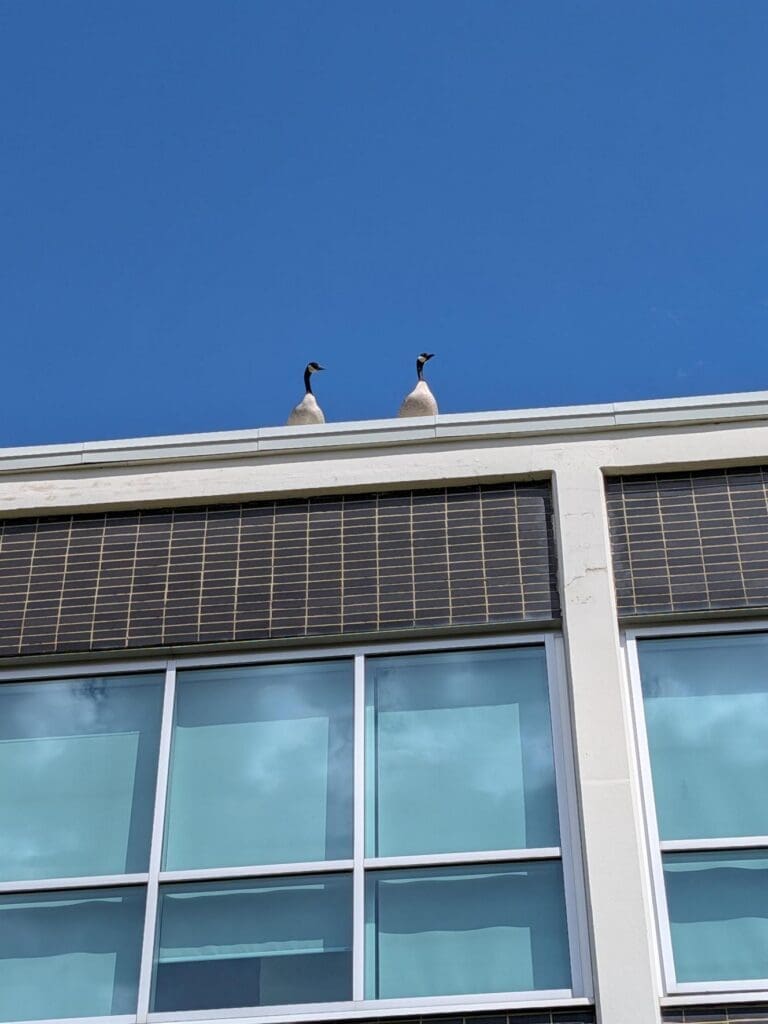
“Geese are pretty good at looking after and managing themselves,” says Gienow. “They know what they’re doing, even when it comes to leading those young across the city, rarely are they injured in the process.”
But he says that if someone does have questions or issues, his hope is that they’d reach out to a wildlife rescue like WILDNorth.
“It’s a community effort to work together so we can work and live in harmony with these beautiful animals.”