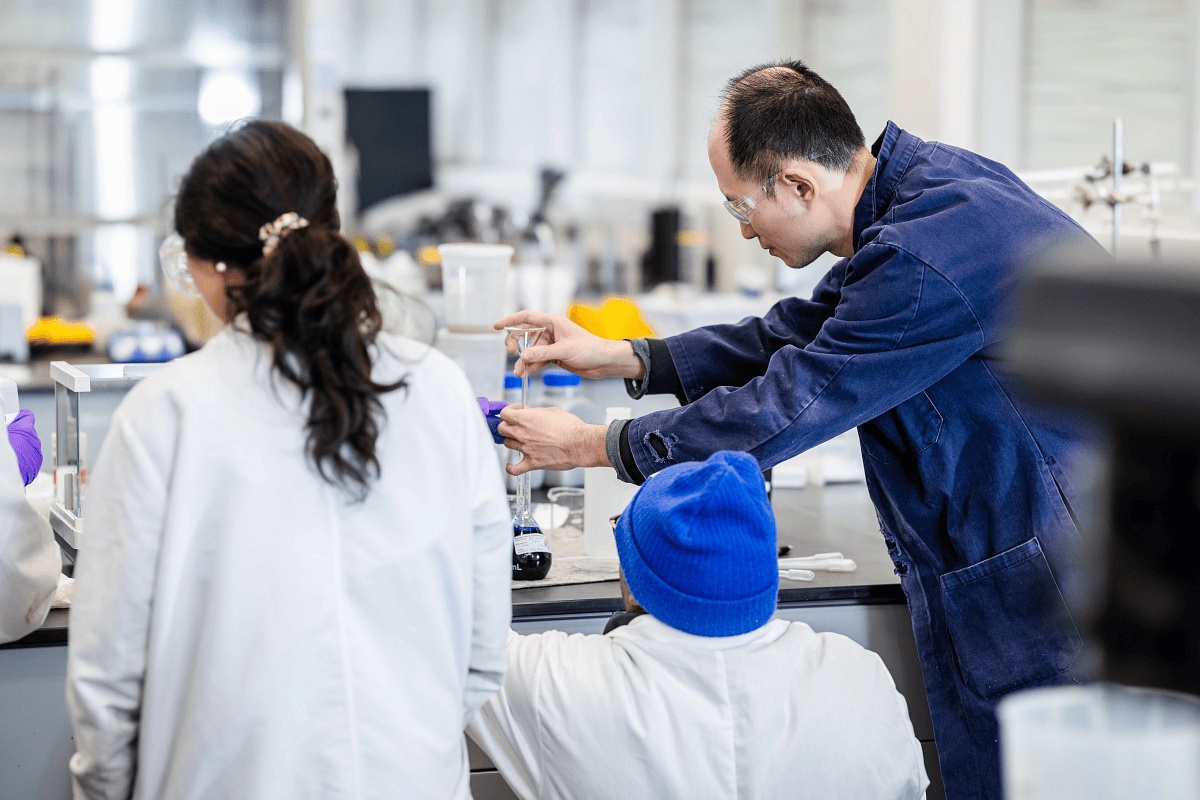
While most students look forward to a break from classes during reading week, NAIT alumna Irish De Ocampo decided to do something different by spending hers doing research in the lab. That decision eventually helped her land a job as a research assistant at NAIT’s Centre for Energy and Environmental Sustainability (CEES).
De Ocampo, a Petroleum Engineering Technology graduate, participated in an accelerated mining training camp through NAIT Applied Research after learning about it through an email from her program chair. She attended an information session and registered for the five-day program.
“That mining camp actually opened up other skills for me,” said De Ocampo.
The camp introduced De Ocampo to laboratory work that was different from what she had studied in the Petroleum Engineering Technology program. Working alongside technologists and students from other programs, she conducted tests on samples, learned analytical procedures and gained experience using laboratory equipment.
One of her biggest challenges was learning to use a pipette, a tool used to measure and transfer small amounts of liquid. “It was really new to me,” De Ocampo said. “That needs a good technique, because you have to be precise.” Even a minor mistake could affect the results, she explained. Whenever she struggled with unfamiliar equipment, she turned to the technologists for guidance. “Always ask, don’t be shy, because it’s better to ask than doing the wrong thing,” she said.
The experience also showed De Ocampo how skills from different programs could complement one another. While Petroleum Engineering Technology students brought knowledge of how to make industrial operations safe, students from other programs had more experience with analytical testing.
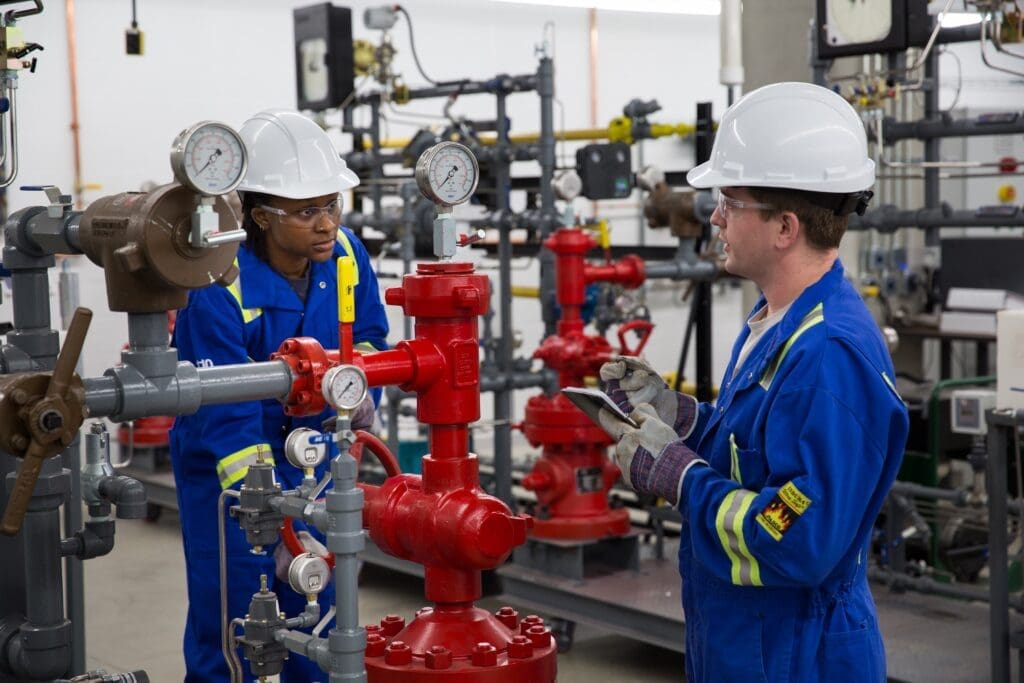
“For my program, safety is the first priority… especially if you work in the field or with big machines, equipments,” she said. In some ways, it’s similar in research. “Doing the mining camp, safety is always the first priority, too. Because you work with chemicals, you spill something, that’s a hazard, right?”
After completing the mining camp, she learned that CEES was hiring student research assistants and decided to apply. “I jumped on it,” said De Ocampo.
“That mining camp actually opened up other skills for me.”
De Ocampo now works as a research assistant, helping prepare samples and conduct tests involving fluids and other materials such as clay. Through the camp, she gained practical skills that expanded her career options beyond fieldwork and into research.
“I get all these laboratory skills, then I have more opportunity other than being a petroleum engineering tech,” she said. De Ocampo believes many students are missing out on similar opportunities simply because they do not know they exist.
“Most of them, they don’t know that the CEES research facility exists, right? Nobody knows about it,” she said.
De Ocampo acknowledged that in an up-and-down industry like oil and gas, skill diversification is important. Students should also consider the networking opportunities that come along with these pursuits. De Ocampo speaks from experience — through her work, she has attended events and met industry professionals, expanding her network beyond the classroom.
De Ocampo encourages students to explore outside their programs and focus on building skills that could lead to future employment.
It might not happen right away, Ocampo said. But it’s about “taking one step at a time.”
“From there, you have more opportunities.”
For more information about CEES and other Applied Research Centres at NAIT, visit their website.
Feature image: Students participate in a CEES training session. Photo via NAIT
This article was originally published in the Nugget’s Nov. 4 print issue. Read it online here.