In the 21st century, all it takes is one quick scroll on any social media page to see an abundance of strange and bland content. Short videos with disembodied flat voices, frames that blend together and objects or people that really don’t look quite right — the dead giveaways of AI.
I’ve seen it everywhere. AI fever is the only way I know how to describe it.
It started with art; learning from and stealing the works of real human creatives. Then it came for music. I listened as even my friends streamed AI song covers and mashups.
By this point, AI had completely taken over the internet. Videos, social media posts, books, kids shows and more. The words don’t make sense, the visuals blend together and it all feels so empty.
Collectively, the internet has nicknamed this type of content “slop.”
AI slop can best be described as AI-made content of any kind that metaphorically melts your brain with its constant churning out of new trends and soulless content — we saw it with Fruit Love Island, an AI-generated series that gained hundreds of millions of views in less than a month. AI slop’s sudden popularity and growing amount of content made me afraid for the future of media. Will this kind of content become normalized?
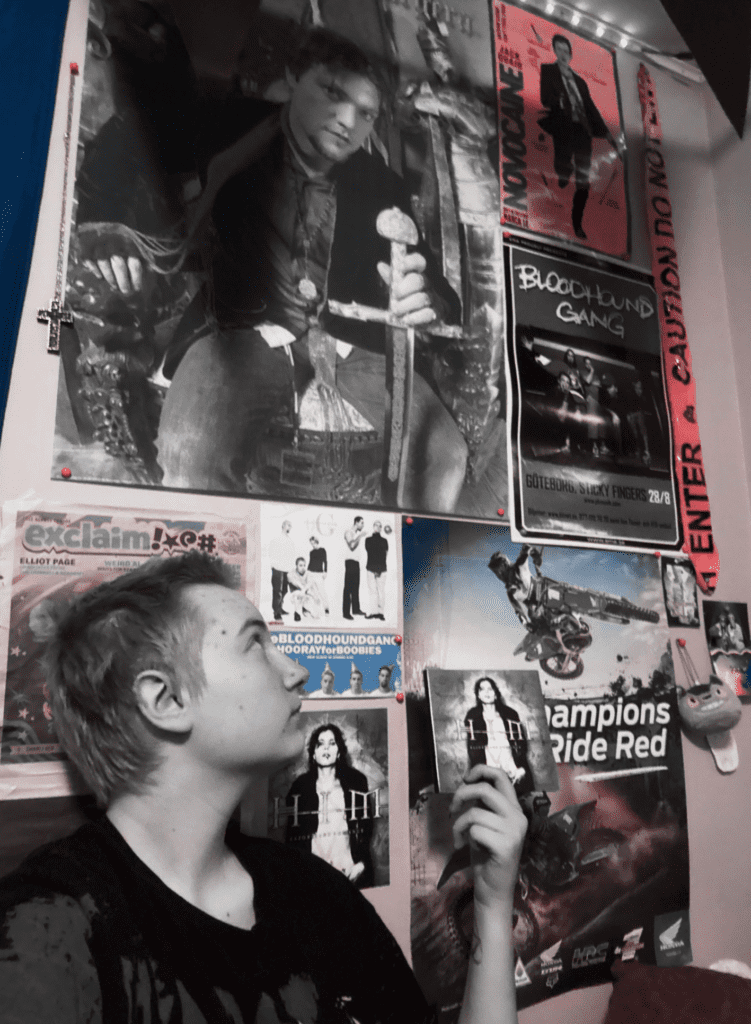
The rapid advancement of AI had me worried that all the things I loved would disappear.
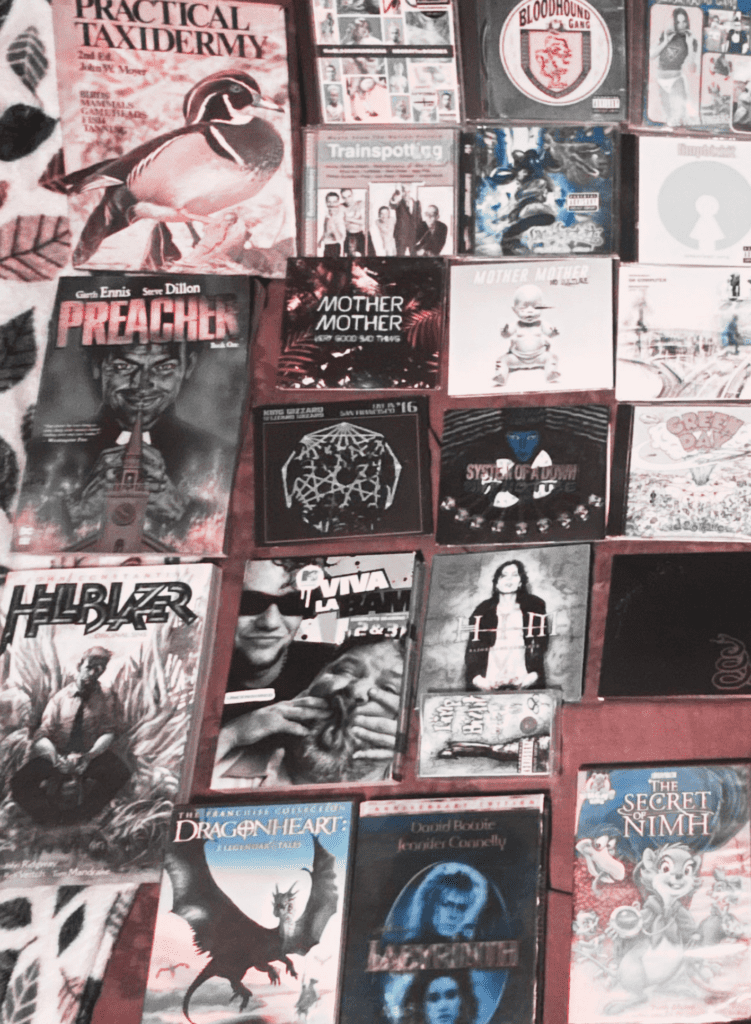
As an adult, I indulge in media that makes me feel more connected to both my childhood and my identity. I practiced this by starting a physical collection of the things I consumed and appreciated.
In the possible dystopian future of AI-only media, collecting is an act of retaliation.
Most of the media I collected was from my childhood, the early 2000s. It connected me to a time where gender stereotypes were pushed on me through my peers, marketing and pop culture. I don’t believe in gender stereotypes, but the times were really like that. I was watching and playing what the times and media told me was “made” for girls. Now, I get to do all the things the other boys got to do, too.
BioShock for my beat up old Xbox 360, MTV shows on DVD, Limp Bizkit on tape and Bloodhound Gang albums on CD are just a few of the things I don’t want to lose to the times. It was this deep, personal connection that led me to develop a fear of losing my outlet of self expression due to the AI take over, or what was — in my mind — the death of art.
I find comfort in knowing that, despite how isolating the age of AI feels, I’m not the only one who feels this way.
‘The joy of being able to pick something up’
Nicky Houseman, a Media Communications and Production student doing her practicum at CKUA Radio Network, shares her own experience with physical media. Houseman collects VHS tapes, cassettes, CDs and vinyl records.
“A little heavier on the vinyl records,” she says. “Because I can place them on my wall and make a piece of art, like they’re all integrated pieces of art, just automatically.”
She loves looking through the used record bins at local shops like Blackbyrd Myoozik and the Junque Cellar. It’s a “reverence for all that comes before,” she explains.
“For me, it’s about the joy of being able to pick something up and look at it and then hear it, and also hear the time and the weatheredness of it.”
In the last couple of years, AI wasn’t the only thing on the rise. Houseman, who also grew up in the 2000s, believes most people from her generation or earlier have an appreciation for physical media collections. She’s not the only one who has picked up on this.
It’s a “reverence for all that comes before.”
“Music fans — especially Gen Z — are getting a little disenchanted with new-fangled digital ways. Tired of having to have an app and a subscription for everything, there’s a movement afoot to return to somewhat simpler times,” wrote Canadian broadcaster and music writer Alan Cross in a Global News article.
A new ‘heyday’ for physical media
DVD and VHS collectors are also surprising store owners with the demand of “outdated” media all over the world, and Edmonton is no exception.
As the desire to own media instead of just accessing it through streaming services rose, there’s been more visibility about the younger generations’ fascination with the past. It’s given way for event trends like vintage media fairs, and businesses are noticing a growing demand for physical media.
Joe French and Melissa Sherwood, the owners of Movie World in Stony Plain, haven’t seen this type of demand since the “heyday” of movie rental stores like Blockbuster and Rogers Video.
“Just in the last couple of years alone, we’re noticing more and more younger generations coming in and picking up DVD, Blu-ray and even VHS,” says French. He’s surprised by my generation’s interest in VHS, but sees it similarly to collecting vinyl. Maybe it’s the “idea of it being retro,” he speculates. “The whole analog of physical media is really, really booming right now.”

The hopefulness of human art
Knowing I’m not alone in this dystopia, I feel a bit more prepared for the future. I feel proud to stand with human art over the onslaught of AI slop.
I find comfort in knowing that, despite how isolating the age of AI feels, I’m not the only one who feels this way.
“It’s hard to justify AI music in an era where it’s already so saturated with artists who are trying to come out of the woodwork and find their own audience,” says Houseman. “If the barrier of entry is find a way to make music, I think there’s a passion that is lost when you just ask something to make you music.”
Instead of asking something to make music, she suggests asking someone — or learning how to yourself. “Making music is difficult, but it feels wrong to put AI music on the same platform as artists, as human people, as human artists,” she explains.
“I think [it’s] just that,” says Sherwood about the importance of human media in the age of AI. “The fact that it’s real and it’s not fake … It’s real content with real humans. It’s not just made up on a computer.”
But French still worries about the future of filmmaking. “Look at some of these AI generated videos where they’re taking actors and actresses who have passed that are now being revived in these big AI-generated things where it’s like, well, what’s the point of having human beings at all in film or the film industry?”
I’ve also heard predictions about human media disappearing and AI replacing the entertainment industry. There is no way to know for sure what will happen, and I don’t blame artists for feeling helpless. It’s no lie that AI is advancing rapidly.
One day, it very well might all be gone. Maybe nobody will want to make art when a robot is doing it for us. But instead of fear, I feel hope — because I see people like Gen Z and others, buying, collecting, trading and more importantly, loving these creations we already have.
Our overflowing bookshelves prove that art isn’t dead, and in the possible dystopian future of AI-only media, collecting is an act of retaliation.
Editor’s note: This article was originally published in the Nugget’s April 8 print issue. Read it here.
Feature graphic by Alleah Boisvert