As of Oct. 29, the official results of Alberta’s referendum have been released. On the topic of separation, Alberta has voted overwhelmingly in favour of remaining in Canada at 75 per cent. It also turns out that Alberta is overwhelmingly divided on the other nine questions posed in the referendum, and the results of five questions could mean even more division.
Questions one through five, which have to do with immigration, received “yes” results. Questions six through nine, which are constitutional questions, received “no” results. But all nine of the questions’ results were within 51 to 57 per cent.
During a statement following polling results, premier Danielle Smith made comments in support of staying in Canada and honouring the Question 10 results but said her party will continue to fight for autonomy.
“We will use every legal and political tool at our disposal to protect and advance the interests of Albertans,” said Smith on Oct. 20. “And when Ottawa interferes with those rights, we will be unrelenting in our response.”
Albertan’s authority
There is something worth considering here when its context refers to questions of constitutional significance. A provincial vote does not itself bring about constitutional change. Though Albertans voted on holding a binding referendum to separate from Canada, our Constitution isn’t that simple.
A referendum cannot, by itself, deliver the changes some Albertans have been led to expect.
“There is no right under the Constitution of Canada to effect the secession of a province from Canada unilaterally,” reads S.C. 2000, c. 26 (Canada’s Act to provide clarity on secession, released by the Supreme Court of Canada). “An amendment to the Constitution of Canada would be required for any province to secede from Canada, which in turn would require negotiations involving at least the governments of all of the provinces and the Government of Canada.”
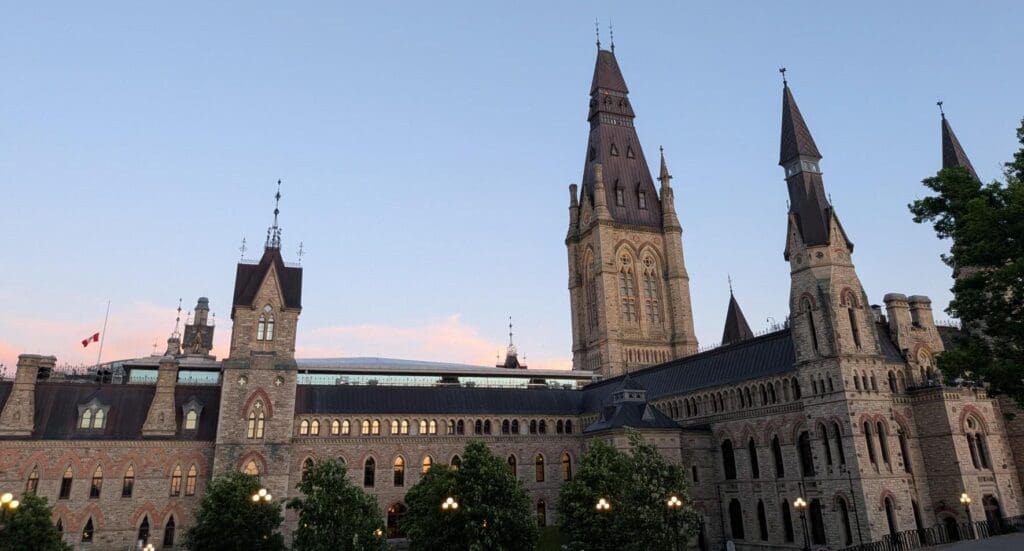
According to section 38 (1) of Canada’s Constitution 1982, an amendment to the Constitution would require approval from the Senate and House of Commons, as well as approval from at least two-thirds of Canada’s provinces — and the provinces must represent at least half of Canada’s provincial population. This is known as the 7/50 formula.
Alberta’s authority in this context is, essentially, the ability to strongly advocate for certain constitutional amendments. A referendum cannot, by itself, deliver the changes some Albertans have been led to expect. Though Smith has said there will not be another referendum on separation while she’s premier, I worry that the division reflected in the nine other questions will not simply disappear. It may instead become something more enduring, particularly where immigration is concerned.
Same issues, new scapegoat
I raise this off the basis that from the start, many people have been misinformed on questions one through five, which Albertans voted “yes” to. Especially those who have advocated for change. I raise this because the implication these questions pose created fear, not meaningful change. For example, is immigration the root cause of bottlenecks and funding issues in our healthcare system? Factually, no. Do the five questions related to immigration provide a scapegoat for the many frustrated people in Alberta who see issues related to our healthcare? Yes. In fact, immigration organizations in Alberta have said they feel as though Albertans’ frustrations have been taken out on them.
There is something troubling about suggesting that the person arriving here is responsible for the deterioration of the place they have just arrived in.
So no, Alberta will not be commencing “the legal process required under the Canadian Constitution to hold a binding provincial referendum on whether or not Alberta should separate from Canada.” We will, however, be faced with the same province we had yesterday, and the day before. We will be greeted with all the same issues. This time though, as the result of five questions, our province will have to tackle these issues divided.
Let me set the tone. We live in a province, and part of the world, that is rich in resources. We live in a part of the world where one may obtain jobs extracting these resources. We live in a part of the world where extracting these resources has afforded many a certain quality of life. A quality of life which, for many years, has been quite comfortable. A quality of life which, due to rising costs, inflation, shortages and more, has been on somewhat of a decline in the recent decade. According to Statistics Canada, Alberta’s annual Consumer Price Index (a measure of inflation) grew roughly 20 per cent between 2018 and 2024.
I have felt this shift. Others have felt this shift. We will continue to feel this shift. How much more, no one can say. What we can say is that uncertainty is in the air. It has been in the air. It will continue, so long as our quality of living remains volatile, to be in the air. What I do not want to be in the air is a feeling of division. What I do not want is for those who enter Canada by way of Alberta to feel unsafe or unwelcome. There is something troubling about suggesting that the person arriving here is responsible for the deterioration of the place they have just arrived in; especially during a time where the best thing we can do is lean on one another.
Feature image with files via Kym MacKinnon/Unsplash